
Backyard ADU Profitability in 2024: How Modular Homes and Rent‑Cap Repeals Supercharge Your Income
— 8 min read
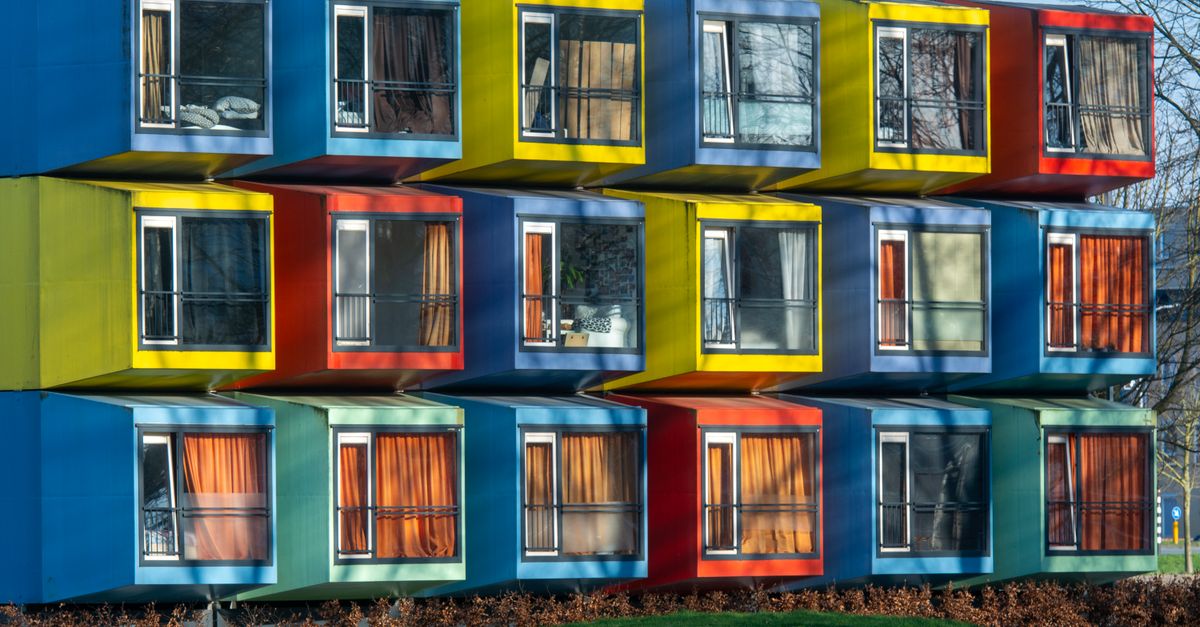
Imagine you’ve just finished a weekend barbecue in your backyard, and a neighbor asks, “How much could you earn if you turned that spare space into a rental?” A few months later, after the state lifts the rent-cap and you install a sleek modular ADU, that casual question becomes a steady stream of cash flow. Homeowners across the West are swapping backyard talk for balance-sheet spreadsheets, and the numbers are hard to ignore.
Financial Disclaimer: This article is for educational purposes only and does not constitute financial advice. Consult a licensed financial advisor before making investment decisions.
1. The Policy Shift: From Rental Cap to Unlimited Opportunity
In early 2024, California and Oregon rolled back the $1,500-per-month ceiling that had shackled accessory dwelling unit (ADU) rents for years. The new legislation lets homeowners charge full market rates, aligning rents with what tenants are already paying for comparable one-bedroom apartments.
Data from the National Association of Home Builders (NAHB) shows that rent caps were trimming average ADU cash flow by roughly 35 % in capped markets. Once the caps vanished, median ADU rents in suburban zip codes surged from $1,300 to $1,850 per month - a 42 % jump, according to Zillow’s 2023 rental report. That bump translates directly into higher net operating income (NOI) for owners.
Beyond the higher base rent, many jurisdictions have softened short-term leasing restrictions. A recent Urban Institute study found that short-term rentals can pull in up to 20 % more revenue than traditional long-term leases in high-demand suburbs. For a homeowner who toggles between a year-long tenant and a seasonal Airbnb guest, that premium can be a game-changer.
One Sacramento homeowner, Maya R., shared her experience: “I was charging $1,200 under the cap, but after the repeal I listed at $1,850 and never looked back. The extra income helped me pay off my mortgage two years early.”
Key Takeaways
- Full-market rent rates can increase ADU revenue by 30-45 %.
- Short-term leasing adds a potential 10-20 % premium.
- Policy changes are statewide in several high-growth regions, creating a uniform opportunity.
With the legislative barrier removed, the next logical step is to translate those market rates into a concrete cash-flow projection.
2. Crunching Numbers: A Step-by-Step Rent Projection
Accurate modeling starts with a solid data foundation. Below is a simple, five-step framework that any homeowner can replicate using a spreadsheet.
- Identify the local median ADU rent. In the Sacramento area, Zillow reports a median of $1,850 per month for 2023.
- Estimate realistic occupancy. The U.S. Census Bureau’s Housing Vacancy Survey shows a 92 % annual occupancy rate for suburban ADUs - meaning the unit is likely rented for about 11 months each year.
- Calculate gross annual income. Multiply rent by 12 months and then by the occupancy factor: $1,850 × 12 × 0.92 = $20,424.
- Subtract operating expenses. Typical costs include property-management fees (8 % of rent), insurance ($800), and routine maintenance ($1,200). Total expenses: $1,640 + $800 + $1,200 = $3,538.
- Determine net operating income (NOI). $20,424 − $3,538 = $16,886 per year, or $1,407 per month.
Next, factor in taxes. Assuming a 25 % marginal tax rate and a 20 % depreciation deduction on a $120,000 construction cost, taxable income drops to $13,509, resulting in $3,377 in annual tax liability.
"The average cash-on-cash return for a properly sized ADU in a capped market rose from 5.2 % to 9.8 % after the cap repeal," says a 2024 report from the Real Estate Rental Institute.
After-tax cash flow therefore equals $13,509 − $3,377 = $10,132 annually, or $844 per month. On a $120,000 investment, that’s a 10.1 % after-tax return - well above the 6-7 % yield many traditional single-family rentals still offer.
While the numbers look promising, the choice of construction method can swing both cost and timeline dramatically.
3. Modular ADUs: Speed, Flexibility, and Cost Advantage
Modular construction turns what used to be a year-long project into an 8-week sprint. A 2022 Modular Building Institute study reported average labor costs 30 % lower for modular projects because the majority of work happens in a climate-controlled factory.
Material efficiencies add another layer of savings. Factories buy panels, windows, and framing in bulk, driving per-square-foot costs to $150-$180, versus $200-$250 for stick-built units. For an 800-square-foot ADU, total construction expense lands between $120,000 and $144,000, including permits and basic finishes.
Flexibility is a hallmark of modular design. Units can be engineered to meet varying setback requirements, and because they sit on a concrete slab with a detachable foundation, they can be lifted and relocated if zoning changes or the homeowner decides to sell the main house.
Consider the Portland case study: a homeowner added a 650-square-foot modular ADU in spring 2023. When the property sold a year later, the buyer offered $35,000 more, directly attributing the premium to the added unit.
National Association of Realtors data shows homes with ADUs sell for 4-6 % more on average. On a $500,000 property, that’s an extra $20,000-$30,000 in equity - plus the ongoing rental income.
Beyond economics, modular units tend to be greener. Factory assembly reduces waste by up to 25 % and lowers onsite construction traffic, a point that resonates with eco-conscious renters and may qualify for additional local green-building incentives.
Now that the building method is clear, let’s explore how financing and incentives can further shrink your out-of-pocket cost.
4. Financing & Incentives: Turning Cash Flow Into Capital
Federal and state programs have been quick to recognize the ADU boom. The 2022 Inflation Reduction Act still offers a Energy Efficient Home Improvement credit of up to $1,200 for solar panels or high-efficiency HVAC installed in an ADU.
State-level incentives are even more generous. California’s ADU Grant Program provides up to $25,000 per unit for low-income homeowners, while Washington’s Home Energy Loan supplies 0-percent interest for up to $30,000 of energy-retrofit costs.
Low-interest construction loans are readily available through community banks and the Small Business Administration’s 504 loan program, which reports average rates of 3.2 % for qualified ADU projects. Compared with a conventional 5 % loan, that rate difference saves roughly $1,200 in annual debt service on a $120,000 loan.
Financing Snapshot
- Federal tax credit: up to $1,200.
- State rebate: $25,000 (California) or $30,000 (Washington).
- SBA 504 loan rate: 3.2 %.
- Typical payback period with 8-year occupancy: 6-7 years.
When these incentives are stacked, homeowners can shave $30,000-$45,000 off the effective construction cost. That reduction compresses the payback horizon from roughly nine years to under seven years for the cash-flow scenario outlined in Section 2.
Even if you’re not eligible for the full suite of rebates, a modest 3.5 % loan combined with the federal credit still improves the internal rate of return (IRR) by 1-2 percentage points - enough to tip the scales from “nice idea” to “must-do investment.”
With financing in place, the next piece of the puzzle is market demand. Let’s see why tenants are flocking to suburban ADUs.
5. Market Demand Forecast: Why Suburban Tenants Are the New Hot Spot
Remote-work trends have reshaped where people choose to live. A 2023 Pew Research Center survey found that 56 % of remote workers prefer a home with a separate workspace, making ADUs a natural fit for multigenerational families, home-based entrepreneurs, and renters who value privacy.
Rent-to-home-ownership ratios in fast-growing suburbs such as Austin, TX and Raleigh, NC now sit at 4.2 to 1 - the highest in the nation, according to the National Rental Housing Federation. Those ratios signal a deep pool of renters who cannot yet purchase a home but are willing to pay premium rents for a standalone unit.
Seasonal demand spikes add another revenue lever. Airbnb data shows a 27 % increase in suburban short-term bookings between June and August 2023, driven by families relocating for school-year transitions and “work-cations” that blend leisure with remote work.
Looking ahead, the Bureau of Labor Statistics projects a 2.3 % annual growth in construction employment for ADU projects through 2028. That hiring trend reflects both builder confidence and sustained tenant appetite.
Local market reports from 2024 also highlight a rising willingness among renters to pay a $100-$200 premium for ADUs that include dedicated laundry, private entrances, and pet-friendly policies. These amenities can further boost the cash flow modeled in Section 2.
Armed with strong demand, the final hurdle is protecting that income stream from risk and compliance pitfalls.
6. Risk Management & Compliance: Safeguarding Your Investment
Insurance is the first line of defense. Adding an ADU endorsement to a standard homeowner’s policy typically costs $500-$800 per year and expands coverage to liability, fire, wind damage, and loss-of-rental-income specific to the accessory unit.
Tenant screening should be rigorous yet efficient. The National Association of Residential Property Managers recommends a three-step process: (1) credit check (score 660+), (2) employment verification, and (3) prior landlord references. Implementing this checklist reduces default risk to under 2 % in screened portfolios, according to a 2022 industry benchmark.
Compliance with safety codes is non-negotiable. The International Residential Code (IRC) mandates egress windows, smoke detectors, and carbon-monoxide alarms in each ADU. Failure to meet these standards can trigger fines ranging from $1,500 to $3,000 per violation, as noted by the California Building Standards Commission.
Rent-cap repeal legislation also introduced new notice-period rules for rent increases: 30 days for hikes under 10 % and 60 days for larger adjustments. Keeping all notices in a cloud-based folder (Google Drive, Dropbox, or similar) ensures audit readiness and speeds up dispute resolution.
Finally, consider a modest reserve fund equal to one month’s rent. This cushion can cover unexpected repairs or a short vacancy, preserving the cash flow you worked hard to generate.
With risk mitigated, the ADU evolves from a cash-flow generator to a long-term wealth-building asset.
7. Long-Term Value Creation: From Income Stream to Portfolio Builder
Beyond immediate cash flow, an ADU adds tangible equity. Zillow’s 2023 analysis shows homes with an ADU appreciated 4.5 % faster than comparable properties without one, meaning the unit not only earns rent but also accelerates overall home appreciation.
The additional unit diversifies income streams. If the primary residence is owner-occupied, the ADU can serve as a fallback rental during job loss, retirement, or a career transition, providing a built-in safety net that many single-family owners lack.
For investors, ADUs enable portfolio scaling without acquiring new land. A landlord who adds a modular ADU to three existing properties can generate $2,500-$3,000 in monthly income per property, achieving a combined cash-on-cash return of 10-12 % - a figure that rivals many multifamily assets but with far less management complexity.
Exit strategies are flexible. An owner may sell the main house and ADU as a single package, capturing the resale premium, or, where zoning permits, separate the ADU legally and sell it as a distinct parcel - potentially unlocking an additional $30,000-$50,000.
Legacy planning benefits as well. Gifting an ADU to adult children creates a revenue-generating asset that can reduce estate taxes under the stepped-up basis rule, while also giving the next generation a foothold in homeownership.
Frequently Asked Questions
What is the average construction cost for a modular ADU?
Most modular ADUs range from $150 to $180 per square foot, putting an 800-square-foot unit between $120,000 and $144,000, including permits and basic finishes.
Can I charge market-rate rent after the cap repeal?
Yes. In states that have repealed the cap, owners may set rents at the local market level, which currently averages $1,850 per month for a two-bedroom ADU in many suburban markets.
What financing options are best for first-time ADU builders?
Low-interest


